If you’re reading this, you’re probably in the early stages of researching a cosmetic procedure — maybe you’ve got one or two practices in mind, you’re wondering what a consultation actually costs, and you’re not entirely sure what you’re supposed to do when you get there.
Here’s the most important thing to know before you book anything: the consultation isn’t just a formality before you sign on the dotted line. It’s your best tool for comparing surgeons, techniques, and pricing — but only if you treat it that way. A lot of patients schedule one consultation at the practice they’ve already half-decided on, listen politely, and book. That’s leaving real money and real safety on the table.
So let’s talk about what consultations cost, what they should include, and how to actually use them.
Consultation Fee Structure
| Practice Type | Typical Consultation Fee | Applied to Surgery? |
|---|---|---|
| High-volume surgical practice | $0–$100 | Sometimes |
| Mid-level established practice | $100–$200 | Usually yes |
| High-end specialist practice | $150–$350 | Usually yes |
| Academic medical center | $200–$400 | Sometimes |
| Second opinion consultation | $150–$350 | Varies |
Free vs. Paid Consultations: What’s the Difference?
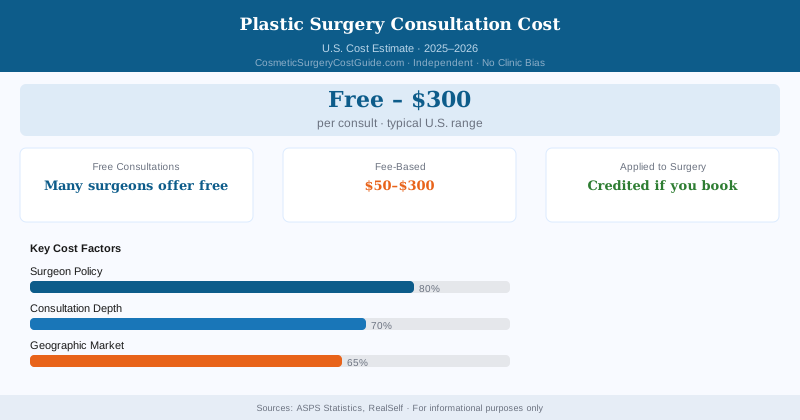
Many practices offer free consultations, especially for common procedures like breast augmentation, liposuction, or injectables. That’s a business decision — the conversion rate from free consultations is high enough to justify the time investment on their end.
Practices that charge $100–$350 for consultations tend to:
- Be booked further in advance (higher demand)
- Attract more committed prospective patients, which means less browsing and more substantive appointments
- Apply the fee toward surgery — so if you proceed, you paid nothing
- Have surgeons who spend more time per consultation
Don’t assume a paid consultation means a better surgeon, and don’t skip a practice just because they charge. Some of the most sought-after surgeons charge for their time. The fee structure often correlates with demand, and demand usually correlates with reputation.
A productive consultation requires preparation on your part. Come ready with:
- Clear goals: Know what specifically bothers you and what outcome you’re hoping for
- Photos: Inspirational photos help communicate goals; realistic reference photos of achievable results are better than celebrity photos
- Medical history: List of medications, past surgeries, allergies
- Specific questions written down (see list below)
- Realistic expectations: Understand that photos are goals, not guarantees
Questions to ask at every consultation:
- Are you board-certified by the American Board of Plastic Surgery?
- How many of this specific procedure do you perform per year?
- What technique would you recommend for my anatomy, and why?
- What results can I realistically expect?
- What are the risks specific to my anatomy and health history?
- What does the all-in quote include (surgeon, anesthesia, facility)?
- What is your revision policy if I’m unhappy with the result?
- Can I see before-and-after photos of your own patients with similar anatomy?
Getting Multiple Consultations: Why You Should
You need at least two or three consultations before you book. Here’s why this actually matters in practice:
Technique differences are real: Surgeons genuinely recommend different approaches for the same concern. Hearing “I’d do an anchor lift” from one surgeon and “you’re a candidate for a vertical lift” from another isn’t confusing — it’s valuable. It means you need to understand why each surgeon recommends what they do for your anatomy.
Prices vary more than you’d expect: Two board-certified surgeons in the same city can quote very different prices for the same procedure, and what’s included in that price varies too. You won’t know until you have something to compare.
You’re choosing someone to trust with your face or body: Personality and communication style matter. You’re going to be interacting with this person throughout your care. That dynamic needs to feel right.
Red flags surface in the comparison: A second opinion sometimes reveals that the first surgeon recommended something too aggressive, proposed the wrong implant size, or suggested a procedure that’s unlikely to achieve what you described wanting.
The cost of three consultations — $0–$600 total — is a trivial investment against a $10,000–$20,000 surgical decision.
Red Flags in a Consultation
Watch for these. Any of them warrants getting another opinion:
The appointment feels rushed: A surgeon who spends less than 30 minutes on a complex procedure consultation isn’t giving your anatomy and goals the attention they need. Full stop.
Pressure or urgency: “This pricing is only available today” or “You should really move on this soon.” High-pressure sales tactics have no place in surgical consultations. Walk out.
No before-and-after photos from their own patients: If a surgeon won’t show you their actual results — not manufacturer stock images — ask why. That’s not a small thing.
Vague or evasive about board certification: Unwillingness to confirm ABPS board certification should stop the conversation.
They agree with everything: A surgeon who validates every idea you walk in with, without ever pushing back on anatomy, alternatives, or limitations, isn’t giving you honest medical guidance. They’re selling you something.
Board certification by the American Board of Plastic Surgery (ABPS) is the standard to verify. This requires medical school, residency, and specific training in plastic surgery. Other board certifications (general surgery, ENT, OB-GYN, ophthalmology) do not confer the same breadth of plastic surgery training. ABPS certification can be verified at www.certificationmatters.org. Never proceed with surgery without confirming your surgeon’s ABPS certification — it’s the minimum standard, not just a preference.
Virtual Consultations: A Useful First Step
A lot of practices now offer video consultations — a surgeon reviews your photos and concerns before deciding whether an in-person visit makes sense. Usually free or $50–$100. Efficient.
Use them as a filter. You can quickly get a sense of whether a surgeon is even the right fit before you commit to traveling across town or paying $200 for an in-person meeting.
Just don’t stop there. A surgeon can’t fully assess your tissue quality, skin elasticity, or three-dimensional anatomy through a screen. Virtual always needs to be followed by in-person before any surgical booking.
What to Ask for After the Consultation
Before you leave — or end the video call — make sure you walk away with:
- A full itemized written quote (surgeon fee, anesthesia estimate, facility fee, implant cost if applicable)
- A summary of the surgical technique recommended and why
- The revision policy in writing
- Before-and-after photos of patients with anatomy similar to yours
If a practice can’t provide all of this, that’s useful information too.
Bottom Line
Budget $0–$300 per consultation, and plan to do two or three before you choose anyone. If the consultation fee gets applied toward surgery, it costs you nothing in the end. Don’t avoid practices that charge for consultations — some of the best surgeons do. Think of the fee as a small line item in a much bigger decision, and use the consultation to actually make a better one.