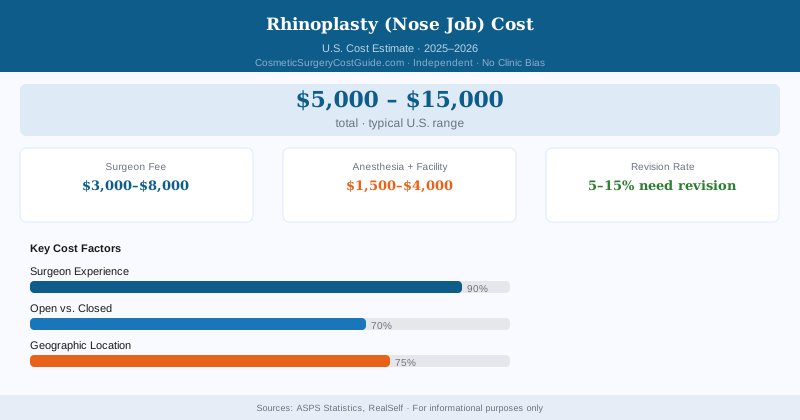
Rhinoplasty quotes range from $4,000 to $20,000 — and when you’re staring at numbers that spread, it’s hard to know what you’re actually looking at. Is the $5,500 quote a bargain? Is the $14,000 quote charging you for a zip code? Here’s what actually drives the price, and what you need to know to compare quotes intelligently.
Estimates include surgeon fee, anesthesia, and facility costs. Revision surgery, pre-op labs, and compression garments add cost. Get 2–3 in-person consultations for accurate quotes.
According to the American Society of Plastic Surgeons (ASPS), about 790,000 rhinoplasties were performed in the US last year, making it one of the most requested facial surgeries. The ASPS puts the national average surgeon fee at $5,483 — but that number is only part of what you’ll pay out of pocket.
What You’re Actually Paying For
When a surgeon quotes you a price, they’re almost always quoting their surgeon’s fee only. Your real total includes several more line items, and this is where quote comparisons get misleading:
| Cost Component | Typical Range |
|---|---|
| Surgeon’s fee | $3,500–$12,000 |
| Anesthesia fee | $1,000–$1,800 |
| Facility/OR fee | $800–$2,500 |
| Pre-op lab work & imaging | $200–$600 |
| Post-op medications | $100–$300 |
| Follow-up visits | Often included |
| Total all-in | $5,500–$17,000 |
Board-certified plastic surgeons in major metro areas — Manhattan, Beverly Hills, Miami — regularly charge $10,000–$15,000 in surgeon fees alone. The same credentials in a mid-sized Midwestern city might run $4,000–$6,000. That’s not a quality gap; that’s what Manhattan rent costs.
Open vs. Closed Rhinoplasty: Does Technique Affect Price?
Yes, but probably less than you’d expect. Open rhinoplasty — where the surgeon makes a small incision across the columella (the strip of skin between your nostrils) — allows better visualization and is often the recommendation for complex reshaping. Closed rhinoplasty keeps all incisions inside the nostrils, which means no visible scar but also a more limited view during surgery.
Open procedures typically add $500–$1,500 to the surgeon’s fee because they take longer. For most patients seeking significant changes, open rhinoplasty is the standard recommendation from experienced surgeons.
Functional vs. Cosmetic: The Insurance Question
Rhinoplasty is almost never covered by insurance. The one exception: if you have a documented deviated septum causing real breathing problems. A septoplasty to correct the deviation is often covered, while the cosmetic reshaping portion isn’t.
Some surgeons perform a combined septorhinoplasty and bill the functional component to insurance while you pay separately for the cosmetic work. Done properly, this can reduce your out-of-pocket cost by $1,500–$3,000. It requires documentation of medical necessity from your doctor and a surgeon experienced in handling the billing split correctly.
- Is your quoted price all-inclusive or surgeon’s fee only?
- Do you use an in-network anesthesiologist?
- What does revision rhinoplasty cost if I’m unhappy with results?
- How many rhinoplasties do you perform per year?
- Can you show me before/after photos of patients with similar anatomy to mine?
What Drives the Price Up
Surgeon experience: A rhinoplasty specialist with 20 years of experience and a national reputation charges more — and that’s not arbitrary. Rhinoplasty is among the most technically demanding facial surgeries. High-volume specialists tend to have meaningfully lower revision rates, which is a financial argument in itself.
Your anatomy: Patients with thicker skin, significant tip work needed, or a history of nasal trauma or prior surgery pay more. Those cases are technically harder and take longer in the OR.
Where you live: California, New York, Florida, and Texas tend to have the highest prices. Surgeons in Ohio, Indiana, or Missouri often charge significantly less for equivalent credentials. That’s overhead and market pricing, not skill.
Facility type: Hospital ORs are the most expensive setting. Accredited outpatient surgery centers typically run 20–40% cheaper, and most rhinoplasties are safely performed in this setting. Ask your surgeon where they operate and why.
Revision Rhinoplasty Costs More
If you’re considering revision rhinoplasty — a second nose job — budget $7,000–$20,000 or more. There are three reasons surgeons charge a premium for revision work:
- Scar tissue from the first surgery makes dissection harder and slower
- Cartilage grafting is often needed (from the ear or rib) to rebuild what was modified before
- Cases take substantially longer in the OR
This is the financial argument for getting the surgeon selection right the first time.
Be cautious of surgeons offering rhinoplasty for under $3,500 total. Extremely low prices can signal a surgeon who isn’t board-certified in plastic surgery or facial plastic surgery, or who operates in a non-accredited facility. In rhinoplasty especially, complications and dissatisfaction requiring revision surgery can end up costing far more than a proper surgeon would have charged initially.
Financing Options
Most cosmetic surgery practices offer financing through CareCredit or Alphaeon Credit, which spread payments over 12–60 months. Some offer 0% interest promotional periods of 12–18 months if you qualify. Many practices also offer in-house payment plans, though these are less common than third-party financing. If financing is part of your plan, ask about it during your consultation — don’t wait until you’re ready to book.
Bottom Line
Budget $7,000–$12,000 all-in for a rhinoplasty with a reputable board-certified surgeon in most US markets. Coastal cities push that to $12,000–$17,000. When you’re comparing quotes, confirm what’s included in each one — an apples-to-apples comparison requires knowing whether anesthesia and facility fees are bundled or separate. The surgeon who quotes $6,500 all-in and the one who quotes $6,500 in surgeon fee only are not the same price.
Frequently Asked Questions
Rhinoplasty (nose job) costs $5,000–$15,000 total, with the ASPS reporting a 2023 average surgeon fee of $5,483. Add anesthesia ($1,000–$1,500), facility fees ($1,500–$3,000), and pre/post-op costs, and total runs $8,000–$15,000 at most practices. Revision rhinoplasty typically costs 20–40% more than primary surgery.
Cosmetic rhinoplasty is not covered by insurance. However, functional rhinoplasty (septoplasty for nasal obstruction) is covered as a medical procedure under most plans. When both cosmetic and functional corrections are performed simultaneously, the functional component may be partially covered — your surgeon's office handles the medical billing split.
The initial splint comes off at 1–2 weeks, and most patients return to work at 2 weeks. Swelling resolves about 70% by 6 weeks and continues improving for 12–18 months. Final results typically aren't visible for a full year. Plan to avoid strenuous exercise for 3–4 weeks and contact sports for 6 weeks.