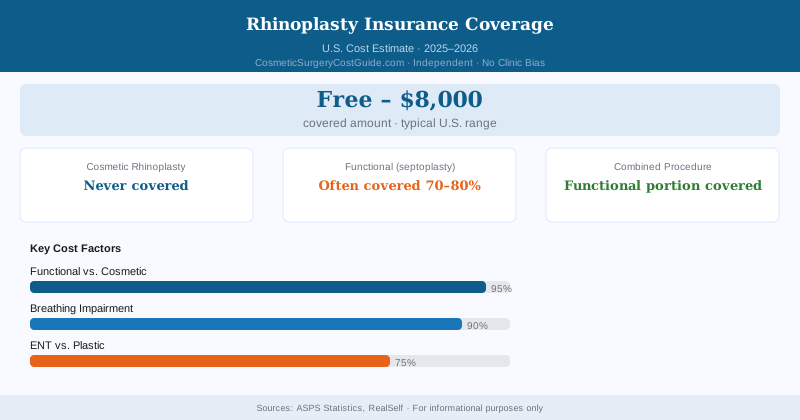
Let’s cut to the question everyone actually wants answered: will your insurance pay for any part of a rhinoplasty? The short version is maybe — but only for the part that fixes a breathing problem, not the part that changes how your nose looks. Here’s how that plays out in the real world.
What Can Be Covered
| Condition | Likely Covered? | Documentation Required |
|---|---|---|
| Deviated septum (structural) | Yes | Nasal endoscopy, symptom history |
| Turbinate hypertrophy | Yes | Examination documentation |
| Internal nasal valve collapse | Yes | Physical exam, symptom documentation |
| External nasal valve collapse | Possible | Cottle maneuver documentation |
| Nasal polyps | Yes | Typically treated by ENT |
| Saddle nose deformity (traumatic) | Possible | Injury documentation |
| Post-traumatic nasal deformity | Possible | Documented injury history |
| Aesthetic hump reduction only | No | No medical indication |
| Tip refinement only | No | No medical indication |
| Overall cosmetic improvement | No | No medical indication |
The Septoplasty vs. Rhinoplasty Distinction
Septoplasty: Surgery on the septum — the internal wall that divides your nasal passages — to correct a deviation and open up airflow. This is a functional procedure. Insurance covers it when there’s documented medical necessity.
Rhinoplasty: Reshaping the outside of your nose. Purely cosmetic rhinoplasty is never covered.
Septorhinoplasty: This is where it gets interesting. When both surgeries happen at once, the functional septoplasty piece can be billed to insurance while the cosmetic rhinoplasty piece is billed to you. Surgeons can itemize the procedure to separate the two components.
How the Billing Split Works
A combined septorhinoplasty might be itemized like this:
- Septoplasty (functional): $2,500 — billed to insurance
- Rhinoplasty (cosmetic): $4,000 — billed to patient
- Anesthesia (prorated): $900 to insurance, $600 to patient
- Facility (prorated): $700 to insurance, $500 to patient
Your out-of-pocket for the cosmetic portion: roughly $5,100 versus $8,500+ for a full private-pay rhinoplasty. The savings are real, but they don’t eliminate most of the cost.
Septoplasty is performed by both ENT surgeons (otolaryngologists) and plastic surgeons. For a purely functional fix, an in-network ENT is usually the most cost-efficient route.
For combined functional-plus-cosmetic rhinoplasty, a board-certified plastic surgeon or facial plastic surgeon with specific rhinoplasty experience typically delivers the better cosmetic result — even if it means navigating dual billing.
If your ENT has confirmed a deviated septum and you also want aesthetic improvement, ask for a referral to a facial plastic surgeon who can handle both components in a single procedure.
Documenting the Medical Necessity
You can’t just tell insurance you have trouble breathing. You need a paper trail. Here’s what that looks like:
1. Symptom documentation: Chronic nasal obstruction, mouth breathing at night, reduced exercise tolerance, disrupted sleep. These need to appear in your medical records — mentioned during office visits to your PCP, ENT, or allergist.
2. Physical examination: Nasal endoscopy documenting the deviation and airflow obstruction. An ENT or plastic surgeon performs and documents this formally.
3. Radiologic imaging: A CT scan of the sinuses gives objective, undeniable evidence of the deviation. Cost is $500–$1,500 and is often covered as a diagnostic test.
4. Failed conservative treatment: You’ll typically need documentation showing you tried nasal steroids, saline rinse, and decongestants first — and that they didn’t solve the problem.
5. Pre-authorization: Submit all of this before scheduling surgery. Don’t assume approval after the fact.
Internal and External Nasal Valve Collapse
Two structural problems beyond a deviated septum can also block airflow — and can sometimes be covered:
Internal valve collapse: A narrowed internal nasal valve angle creates obstruction that isn’t technically a “deviated septum.” Coverage is possible but requires documentation that the valve collapse is specifically causing the obstruction.
External valve collapse: The nostril sidewalls collapse inward during inhalation. The Cottle maneuver — placing a fingertip beside the nostril and pulling the cheek gently toward the ear — should relieve the obstruction if this is your issue. Documenting that positive test matters for a coverage argument.
The Reality of Coverage Savings
Here’s what insurance actually saves you:
- Full private-pay rhinoplasty: $8,000–$12,000
- Septoplasty covered by insurance: saves $2,000–$4,500 (surgeon, anesthesia, facility, prorated)
- Remaining cosmetic rhinoplasty cost: $5,000–$9,000
So yes, meaningful savings — but you’re still paying several thousand dollars out of pocket for the cosmetic portion. Budget accordingly.
Be transparent with your surgeon about your functional symptoms. Surgeons who knowingly exaggerate or fabricate functional indications for insurance coverage are committing insurance fraud — a federal crime that can end their career and expose them to criminal prosecution. Patients who participate in fraudulent documentation face legal risk as well. If you have genuine breathing problems, document them honestly. If your concerns are purely cosmetic, pay out of pocket.
If You Have Both Functional and Cosmetic Goals
The most practical path forward: start with an ENT consultation to assess your breathing. If the ENT documents a deviated septum or valve collapse, ask for a referral to a board-certified facial plastic surgeon who can address both in a single procedure — with proper itemized billing.
One surgery, one anesthesia, one recovery. And you’re only paying for the cosmetic portion out of pocket.
Bottom Line
Insurance covers septoplasty and other functional nasal repairs when you’ve documented medical necessity — typically saving $2,000–$4,500 off the total rhinoplasty cost. Purely cosmetic rhinoplasty is never covered. If you have genuine functional problems alongside cosmetic goals, a combined septorhinoplasty with properly itemized billing is the smart approach. Start building your symptom history with your PCP and ENT well before surgery, and work with a surgeon who’s experienced in separating the functional and cosmetic billing components.