About 80% of Americans have some degree of nasal septal deviation — but for most, it’s a minor anatomical quirk with no real impact. For the roughly 20% with symptomatic obstruction, though, a deviated septum means years of mouth breathing, chronic congestion, disrupted sleep, and recurring sinus infections that no spray bottle quite fixes.
Septoplasty is the surgical solution. And for many patients, it’s also the moment they realize they can address both function and aesthetics at the same time — something the ENT world calls septorhinoplasty. Understanding where the costs split, and what insurance covers, makes the financial picture a lot clearer before you commit.
Septoplasty Cost Breakdown
| Cost Component | Range |
|---|---|
| Surgeon’s fee — septoplasty alone | $2,000–$5,000 |
| Anesthesia | $800–$1,500 |
| Facility / operating room fee | $600–$1,500 |
| All-in total — septoplasty alone | $3,000–$7,000 |
| Surgeon’s fee — septorhinoplasty (combined) | $4,000–$12,000 |
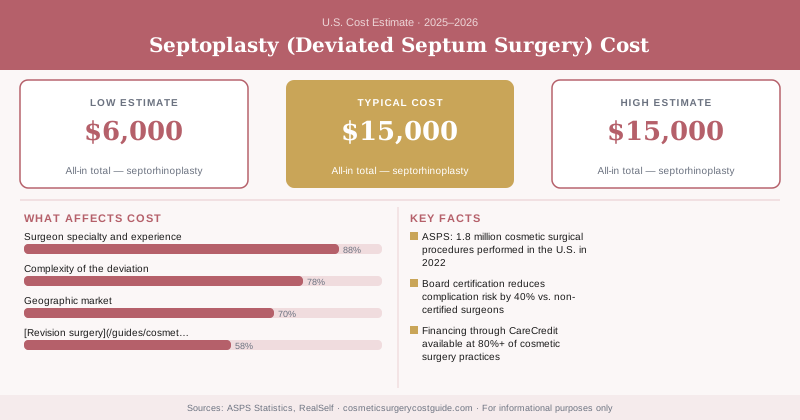
| All-in total — septorhinoplasty | $6,000–$15,000 |
Functional Septoplasty vs. Septorhinoplasty
Functional septoplasty corrects the deviated septum internally. No external incisions, no change to your nose’s appearance from the outside. The goal is purely to restore airflow. Recovery involves a week with an internal splint, 3–4 weeks of residual swelling, and typically 2–3 weeks before returning to normal activity. Surgeon fees run $2,000–$5,000 depending on complexity and geography; insurance frequently covers most or all of the cost when medical necessity is documented.
Septorhinoplasty adds an external rhinoplasty to the functional correction. The same operating session addresses your breathing obstruction and reshapes the nose aesthetically — correcting a bump, refining the tip, narrowing the width, or improving nasal symmetry. Because it’s one surgery rather than two, patients save significantly on anesthesia and facility fees. ASPS noted in 2023 that septorhinoplasty has become one of the most popular combination procedures, with demand accelerating post-COVID as patients reconsidered longstanding concerns they’d deferred.
The critical billing distinction: insurance covers only the septoplasty component. The rhinoplasty portion is always self-pay, regardless of how the surgery is packaged. Surgeons who regularly perform septorhinoplasty understand how to itemize the procedures correctly so your insurer processes the covered component.
Documentation is everything. Before your surgeon can submit for pre-authorization, you’ll typically need:
- Diagnosis from an ENT or allergist confirming deviated septum and nasal obstruction
- Nasal endoscopy or CT imaging showing the structural defect
- Record of conservative treatment failures — nasal corticosteroid sprays, antihistamines, decongestants tried for 3–6 months minimum
- Symptom impact documentation — sleep disruption, recurrent sinusitis, exercise intolerance due to breathing
Most insurers require pre-authorization before surgery is scheduled. If denied, appeals with additional documentation succeed more often than patients expect — especially when sleep disruption or recurrent infections are well-documented.
What Drives the Price Range
Surgeon specialty and experience: Board-certified otolaryngologists (ENT surgeons) and board-certified plastic surgeons both perform septoplasty. For functional-only procedures, ENTs are often equally or more experienced. For septorhinoplasty, a plastic surgeon or a surgeon with subspecialty rhinoplasty training typically handles the aesthetic component with greater precision — and charges accordingly.
Complexity of the deviation: Some deviations are simple cartilage corrections; others involve bony spurs, significant posterior deviations, or prior trauma that complicates the anatomy. Complex cases take longer and cost more.
Geographic market: High-cost markets (NYC, Los Angeles, Miami, Chicago) command 25–40% more than mid-size metros for the same procedure.
Revision surgery: If you’re correcting a previous rhinoplasty or septoplasty with unsatisfactory results, costs increase substantially — revision rhinoplasty can run $8,000–$20,000 or more, as the anatomy is significantly harder to work with. Expect fewer surgeons willing to take revision cases, and expect them to charge a premium.
The Insurance Coverage Conversation
The American Academy of Otolaryngology — Head and Neck Surgery (AAO-HNS) recognizes deviated septum as a common cause of nasal airway obstruction, affecting a meaningful percentage of the population with functional symptoms. Insurance coverage under medical necessity provisions is genuinely available — this isn’t a stretch or a loophole. You need documentation, pre-authorization, and a surgeon who understands the billing distinction.
What insurance will never cover: the rhinoplasty component of a septorhinoplasty. Even if your surgeon performs both procedures through the same incisions, the aesthetic work is carved out as self-pay. Surgeons submit separate codes for the functional and cosmetic components; your explanation of benefits will reflect this split.
If you’re uninsured or your insurer denies coverage, the all-in septoplasty cost of $3,000–$7,000 is the out-of-pocket reality. Most surgical practices offer payment plans, and both HSA and FSA funds can be applied to medically necessary septoplasty.
Be cautious of surgeons who quote unusually low fees for septorhinoplasty — particularly those promising dramatic cosmetic changes at steep discounts. Rhinoplasty is one of the most technically demanding procedures in plastic surgery, with revision rates that reflect that difficulty. The AAO-HNS and ASPS both recommend verifying board certification in the relevant specialty before proceeding. A botched rhinoplasty is far more expensive to correct than the savings from a bargain original.
Recovery Expectations
Functional septoplasty alone is relatively straightforward: internal splints or packing for about a week, significant swelling for 2–3 weeks, and most patients are back to desk work within 7–10 days. Strenuous activity waits 3–4 weeks.
Septorhinoplasty recovery is more involved. Expect an external splint for 1–2 weeks, dramatic bruising and swelling around the eyes and bridge for the first week, and a gradual reveal over 3–4 months. The nose looks “mostly done” by month 3, but final rhinoplasty results — especially tip refinement — genuinely take 6–12 full months to settle. Don’t judge your outcome at 6 weeks.
Frequently Asked Questions
Insurance covers septoplasty when it's medically necessary — meaning you have documented breathing obstruction, chronic sinusitis, or sleep disruption caused by the deviated septum. You'll typically need to show conservative treatments (nasal sprays, decongestants, allergy management) haven't provided adequate relief. Your ENT or surgeon submits documentation to your insurer for pre-authorization. If rhinoplasty is performed at the same time to reshape the nose externally, that cosmetic component is never covered — you'll pay out-of-pocket for the rhinoplasty surgeon fee while insurance handles the septoplasty portion.
Septoplasty corrects the internal nasal septum — the wall of cartilage and bone dividing your nasal passages. It's a functional procedure aimed at improving airflow. Rhinoplasty reshapes the external appearance of the nose: the bridge, tip, width, or overall profile. Septorhinoplasty combines both: the surgeon corrects your septum for breathing while simultaneously reshaping the nose aesthetically. Many patients use the medically necessary septoplasty as an opportunity to address cosmetic concerns at the same time, since they're already in the operating room.
For the breathing improvement, you'll notice significant change within a few weeks once swelling subsides. For the cosmetic rhinoplasty component, patience is required. Initial dramatic swelling resolves in 3–4 weeks, and you'll look 'mostly there' by 3 months. But final rhinoplasty results take 6–12 full months — the nasal tip in particular stays swollen longer than any other area. Photographs at 12 months give you the most accurate view of your outcome.