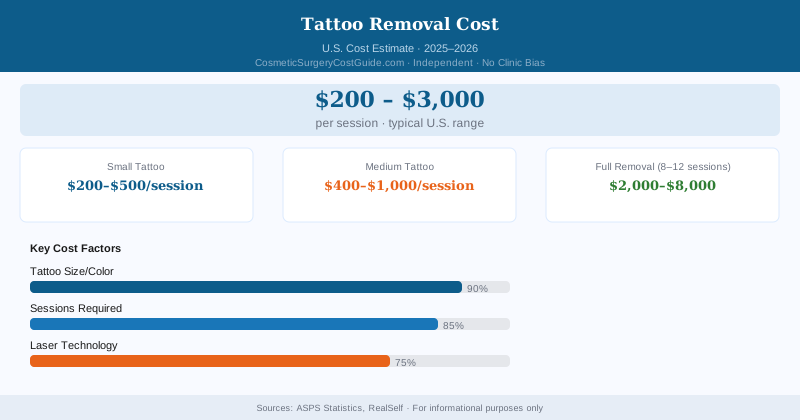
Tattoo removal is one of the most requested aesthetic procedures in the US, and one of the most misunderstood in terms of what it actually costs. The total investment depends on so many variables — tattoo size, ink colors, depth, skin tone, how completely you want it gone — that two people can walk in with tattoos that look similar and face wildly different total costs.
The good news: laser technology has improved dramatically. Picosecond lasers now achieve more complete removal with fewer sessions than the older nanosecond devices most practices used five years ago. Here’s how to think through what your removal will actually cost.
Tattoo Removal Cost Per Session by Size
| Tattoo Size | Per-Session Cost | Sessions Needed | Total Course Cost |
|---|---|---|---|
| Very small (thumbnail) | $100–$200 | 5–8 | $500–$1,600 |
| Small (credit card) | $150–$350 | 6–10 | $900–$3,500 |
| Medium (hand-sized) | $250–$500 | 8–12 | $2,000–$6,000 |
| Large (quarter sleeve) | $400–$700 | 8–15 | $3,200–$10,500 |
| Extra large (full sleeve, back) | $600–$1,200 | 10–20 | $6,000–$24,000 |
Why So Many Sessions?
Laser tattoo removal works by shattering ink particles into fragments small enough for the immune system to carry away. Each session breaks some of the ink; your lymphatic system then clears the debris over the following 6–8 weeks. You need multiple sessions because:
- Not all ink particles shatter in a single session
- The body needs 6–8 weeks between sessions to actually clear the debris
- Deeper ink is harder to reach until surface layers have cleared
- Multiple ink colors each require different laser wavelengths
Rushing sessions closer together — less than 6–8 weeks apart — actively slows clearance. You’re trying to remove ink faster than your body can process it, and the results suffer.
Ink Color Matters Enormously
This is where most patients get surprised. Ink color dramatically affects how many sessions you’ll need and whether complete removal is even achievable.
| Ink Color | Laser Wavelength | Removability |
|---|---|---|
| Black | 1064nm Nd:YAG | Excellent |
| Dark blue | 1064nm | Excellent |
| Green | 755nm Alexandrite | Moderate-good |
| Red | 532nm KTP | Good |
| Orange | 532nm | Moderate |
| Yellow | 532nm | Difficult |
| Purple | Multiple wavelengths | Moderate |
| White/flesh tones | No effective laser | Very difficult — may darken paradoxically |
| UV/fluorescent inks | Special wavelengths | Difficult |
Black ink absorbs all laser wavelengths — it’s the most removable color. Multi-colored tattoos require multiple laser wavelengths across different sessions, adding sessions and cost. Yellows, whites, and flesh tones are notoriously stubborn and may never achieve complete removal.
Older Q-switched nanosecond lasers are still widely used for tattoo removal. Newer picosecond lasers (PicoSure, PicoWay, Cutera Enlighten) deliver energy in trillionths of a second — 1,000 times faster than nanosecond pulses. This creates more efficient ink shattering through photomechanical (not just photothermal) energy.
The practical difference:
- Fewer sessions needed (often 30–50% fewer sessions to achieve the same clearance)
- Better clearance of difficult colors (green, blue)
- Lower risk of scarring and hypopigmentation
- Higher per-session cost ($250–$600 vs. $150–$400 for nanosecond)
For most patients wanting significant clearance, picosecond lasers offer better value even at higher per-session cost when the reduced session count is factored in.
Package Pricing and Unlimited Sessions
Many tattoo removal practices offer unlimited session packages — a flat fee for all sessions needed until complete removal. For complex, multicolor, or large tattoos where session count is hard to predict, unlimited packages provide cost certainty:
- Unlimited sessions packages: $600–$2,500 depending on tattoo size and practice pricing
- This is often excellent value for tattoos likely to need 10+ sessions
Read the fine print: some “unlimited” packages have caveats — specific time periods, exclusions for certain ink types, or colors the practice considers non-removable.
Skin Tone Considerations
Laser tattoo removal on darker skin tones (Fitzpatrick IV–VI) requires more conservative settings to avoid hypopigmentation — permanent skin lightening at the treatment site. Sessions may need to be spaced further apart, and more sessions may be required to reach the same level of clearance.
The American Society for Dermatologic Surgery (ASDS) recommends Nd:YAG 1064nm lasers as generally safer for darker skin — this wavelength is less absorbed by melanin than shorter wavelengths. When researching providers, ask specifically what protocol they use for your skin tone.
Tattoo removal scars can result from overly aggressive treatment settings. The goal is to shatter ink without overheating the surrounding skin. Signs of aggressive settings include significant blistering, slow healing, or obvious scarring after sessions. If your healing is taking longer than expected or you see abnormal wound healing, discuss settings with your provider at your next session. It’s better to need more sessions than to achieve complete removal with a scar in its place.
Fading for Cover-Up vs. Complete Removal
If you’re fading a tattoo for a cover-up rather than complete removal, you typically only need 3–5 sessions to lighten the ink enough for a new tattoo to cover it effectively. This significantly changes the cost calculation:
- 3–4 sessions for cover-up fading: $450–$1,600 depending on size
- vs. 8–15 sessions for complete removal of the same tattoo
Tell your provider upfront whether your goal is complete removal or cover-up fading. It affects the treatment protocol and significantly affects cost.
Bottom Line
For a small to medium black tattoo aiming for full removal: budget $1,500–$4,000 total with a picosecond laser. Multicolor tattoos or large pieces: $3,000–$12,000+. Unlimited packages from reputable practices often provide the best value for complex or unpredictable cases. Choose a provider using picosecond technology for the best results per session, and space sessions appropriately — 6–8 weeks minimum — to allow complete immune clearance between treatments.