Thermage vs. Ultherapy: here’s what actually matters when choosing between them. Both are non-invasive skin tightening devices, both cost $2,000–$5,000 for a full-face treatment, and providers often recommend them interchangeably. But the technologies are genuinely different, they work differently in the skin, and they’re not equally good for every situation.
Thermage has been around since 2002 — one of the original non-surgical tightening devices. The current Thermage FLX is a substantially improved version. It uses radiofrequency (RF) energy to heat deep dermal tissue and stimulate collagen remodeling, producing gradual tightening over 2–6 months. Ultherapy uses focused ultrasound. The mechanisms, depth of action, and optimal applications differ. Understanding the distinction helps you push back intelligently when a provider recommends one without clearly explaining why.
Thermage Cost in 2025
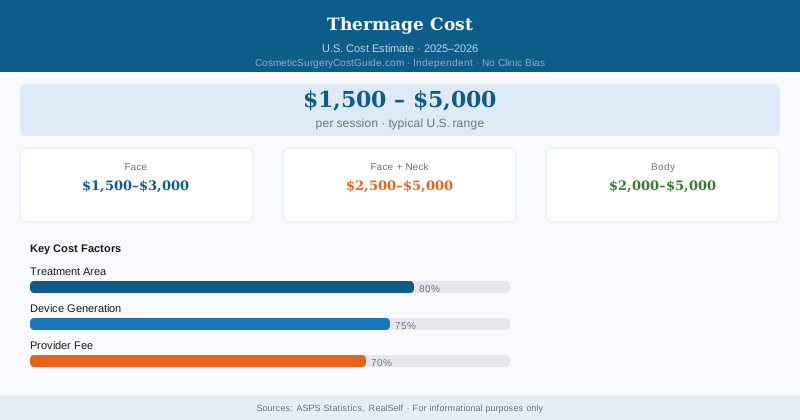
| Treatment Area | Thermage FLX Cost | Sessions |
|---|---|---|
| Full face | $1,500–$3,500 | 1 |
| Face + neck | $2,500–$5,000 | 1 |
| Eyelids (Thermage for eyes) | $800–$1,500 | 1 |
| Body (abdomen, thighs, arms) | $1,500–$3,500 per area | 1 |
| Neck only | $1,000–$2,500 | 1 |
| Hands | $500–$1,000 | 1 |
How Thermage Works
Thermage uses monopolar radiofrequency energy delivered through a single-tip applicator, heating tissue uniformly across the skin surface. The energy heats the dermal layer to 60–70°C, which does two things:
- Immediately contracts existing collagen fibers — some patients notice modest tightening right after treatment
- Triggers a healing response that stimulates new collagen production over the following 2–6 months
Unlike Ultherapy, which targets precise anatomical depths with real-time imaging, Thermage heats tissue more broadly. Less targeted by depth, but covers more surface area efficiently. That’s a trade-off, not a flaw.
Thermage for Eyes: A Unique Application
Thermage has FDA clearance specifically for the periorbital area — the eyelid region — making it the only radiofrequency device with that indication. This matters for:
- Upper eyelid skin laxity (a non-surgical alternative to blepharoplasty for mild cases)
- Lower eyelid skin quality and texture
- Crow’s feet
Cost: $800–$1,500 for the eye area alone. If you have mild upper eyelid laxity and you’re not ready for surgery, Thermage FLX Eye is worth discussing with a board-certified provider.
This comparison matters because both are often recommended interchangeably, but they have real differences:
Thermage (radiofrequency):
- Heats tissue broadly
- Good for skin surface improvement and overall tightening
- FDA-cleared for eyelids specifically
- Slightly more comfortable than early Ultherapy
- Results appear faster (weeks vs. months)
Ultherapy (ultrasound):
- Targets specific tissue depths (down to 4.5mm SMAS layer)
- Better for more targeted lifting effect on brow and jowl
- Includes real-time imaging to confirm tissue targeting
- Generally more uncomfortable during treatment
Many providers use both in combination for comprehensive facial rejuvenation. Solo: if skin surface quality and tightening is the primary goal, Thermage; if lifting of specific areas is the goal, Ultherapy.
Who Is a Good Thermage Candidate?
Best candidates:
- Mild-to-moderate skin laxity on the face, neck, or body
- Patients who want improvement without surgery or downtime
- Those wanting to treat body areas (abdomen, inner thighs) non-invasively
- Patients who’ve had surgery and want to maintain or extend results
- Periorbital laxity patients not ready for surgical blepharoplasty
Less suitable:
- Patients with significant laxity who need surgical correction
- Those with very thin or atrophic skin (insufficient collagen to stimulate meaningfully)
- Anyone expecting dramatic transformation from a single session
Thermage for the Body
One area where Thermage stands out from Ultherapy is body use. Thermage has FDA clearance for body skin tightening — the abdomen after weight loss, inner thighs, and upper arms. The cost per body area ($1,500–$3,500) is considerably less than surgery, and there’s no downtime at all.
Results are more modest than surgery, but meaningful for patients with mild laxity who don’t want surgical intervention. Some providers offer Thermage in combination with liposuction — fat removal followed by RF tightening of the remaining skin — as a combined approach.
Thermage has been associated with rare reports of fat atrophy — unwanted loss of fat volume in the treated area. This is distinct from skin tightening and can create a hollow or sunken appearance if it occurs. The risk appears linked to high settings or over-treatment of thin-skinned areas. This is one reason having Thermage performed by experienced, conservative providers matters — not just for results, but for avoiding unwanted effects.
Thermage FLX vs. Older Thermage: The Upgrade
If you’re comparing providers, make sure they’re using the current FLX platform. It’s a real improvement:
- 25% more treatment pulses per tip
- Built-in vibration to improve comfort during treatment
- Total Tip technology for more even energy distribution
- AccuREP technology for real-time feedback on treatment effectiveness
Older Thermage equipment produces meaningfully inferior results and is less comfortable. Don’t accept less when asking about the specific platform.
Duration and Maintenance
Results develop over 2–6 months and typically last 1–2 years. The rate of natural aging continues after treatment, so maintenance every 1–2 years helps sustain the improvement.
Annual maintenance math: Full-face treatment every 18 months at $3,000 = roughly $2,000 per year.
Bottom Line
Full-face Thermage FLX: $2,000–$3,500 at most practices. Face plus neck: $3,000–$5,000. Eye area tightening: $800–$1,500. Thermage is a legitimate tool for patients with mild-to-moderate skin laxity who prefer no downtime. For more targeted lifting — brow, jowl — or significant laxity, Ultherapy or surgery are more appropriate choices. For the most comprehensive result, both Thermage and Ultherapy can be combined to address multiple tissue layers in a single treatment day.