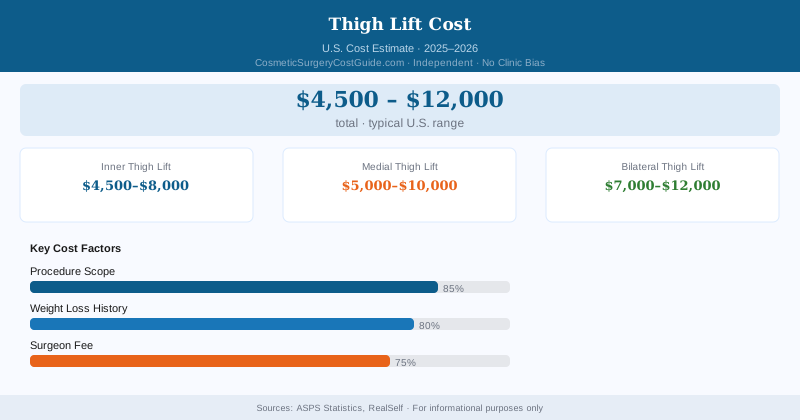
Thigh lift procedures increased 68% over the past decade, according to ASPS trend data — and over 17,000 thigh lift procedures were performed in the US in 2023 alone. The driver behind that growth isn’t a beauty trend. It’s bariatric surgery.
When someone loses 80, 100, or 150 pounds — whether through surgery or sustained lifestyle change — the fat is gone. But the skin that once stretched to accommodate it doesn’t always contract. The inner thighs are among the most difficult areas for residual skin to self-correct, and for patients who’ve done the hard work of losing weight, persistent skin folds that cause chafing, rashes, and clothing frustration are a genuinely functional problem.
Thighplasty (thigh lift surgery) removes that excess skin. It trades the laxity for a scar — a trade that most post-weight-loss patients find completely worthwhile once they understand the scar placement and what daily life looks like in recovery.
Thigh Lift Cost by Type
| Procedure Type | Surgeon Fee | All-In Cost |
|---|---|---|
| Medial (inner) thigh lift | $4,000–$6,500 | $5,000–$8,500 |
| Lateral (outer) thigh lift | $4,500–$7,500 | $5,500–$9,500 |
| Total thigh lift (medial + lateral) | $7,000–$11,000 | $8,500–$13,500 |
| Extended medial thigh lift (to knee) | $5,500–$9,000 | $7,000–$12,000 |
| Thigh lift + liposuction add-on | +$1,000–$3,000 | varies |
| Anesthesia + facility | — | $1,500–$3,000 |
Medial vs. Lateral Thigh Lift: What’s the Difference?
Medial (inner) thigh lift targets the inner thigh skin that hangs between the legs, causing chafing and rubbing with walking. The incision runs in the groin crease — the most naturally concealed location for a surgical scar on the body. It’s hidden in swimwear, underwear, and most clothing. This is the most common thigh lift type, especially for post-bariatric patients. Cost: $5,000–$8,500 all-in.
Lateral (outer) thigh lift addresses the outer thigh and hip area, often treating “saddle bag” skin laxity. The incision runs along the hip/waistline in the bikini line area. The scar is more visible in certain swimwear but hides under most clothing. Frequently combined with a tummy tuck or lower body lift as part of post-bariatric body contouring. Cost: $5,500–$9,500 all-in.
Total thigh lift combines both medial and lateral incisions for comprehensive thigh contouring. It’s appropriate for patients with significant skin excess on both inner and outer thighs — most commonly post-bariatric patients with 100+ lb weight loss. Cost: $8,500–$13,500 all-in.
Extended medial thigh lift extends the incision beyond the groin crease down toward the inner knee when skin laxity extends that far. The additional scar length addresses more surface area but is more visible. Cost: $7,000–$12,000 all-in.
Many surgeons combine liposuction with thigh lift to debulk remaining fat before skin excision, creating a smoother, more contoured result. The add-on typically costs $1,000–$3,000 more.
Whether you need liposuction combined depends on your anatomy. If significant fat remains alongside skin laxity, excision alone may leave a thigh that’s tighter but not particularly contoured. If the primary issue is skin with minimal fat, liposuction may not be necessary.
Your surgeon should address this directly during consultation.
Post-Bariatric Thigh Lift: What’s Different
Post-bariatric body contouring is a subspecialty within plastic surgery. Patients who’ve lost 100+ lbs face different anatomical challenges than patients with mild age-related laxity:
- More extensive skin excess requiring larger excisions and longer operating time
- Skin quality changes from stretch marks and prior skin breakdown
- Nutritional considerations — protein, vitamin D, iron, and B12 levels must be optimized for wound healing
- Weight stability requirement — 12+ months at stable weight strongly recommended before surgery
ASMBS (American Society for Metabolic and Bariatric Surgery) guidelines recommend post-bariatric body contouring only after weight has been stable for 6–12 months. Some surgeons require 18–24 months. This isn’t arbitrary — skin that’s still changing due to ongoing weight loss produces suboptimal surgical results.
What Drives Price Variation
Extent of skin removal: More skin removed = longer operating time = higher surgeon’s fee. A mild medial thigh lift in a patient 10 lbs overweight takes far less time than an extensive bilateral lift in a post-bariatric patient.
Combining procedures: Thigh lift is frequently combined with a lower body lift, tummy tuck, or arm lift as part of a comprehensive post-bariatric contouring plan. Combining saves anesthesia and facility fees.
Surgeon experience: Body contouring after major weight loss is technically demanding. Look for surgeons with specific post-bariatric contouring experience and volume. ASPS body contouring designations and before/after galleries specific to post-weight-loss cases are meaningful signals.
Geographic location: Urban coastal markets cost 25–40% more than comparable care in mid-size cities.
Lymphedema is a small but real risk with extensive thigh lift surgery — particularly when both medial and lateral dissection is performed. The lymphatic channels in the inner groin area can be disrupted, potentially causing chronic swelling. This risk should be discussed explicitly during your consultation. It’s not common, but it’s permanent when it occurs. High-volume post-bariatric surgeons are most familiar with techniques that minimize this risk.
Recovery Demands
Most patients need 2 weeks off work. You’ll wear a compression garment on the thighs and hips for 6 weeks. Walking is encouraged early — it reduces clot risk — but significant exertion is restricted for 4–6 weeks. You won’t be doing lower-body workouts for 6–8 weeks.
The groin scar tends to heal well and hide well. The outer hip scar takes longer to mature. Final results — including full scar maturation — take 12–18 months.
Frequently Asked Questions
Occasionally. Insurance may cover thigh lift surgery when excess skin causes documented functional impairment — chronic skin infections (intertrigo), rashes, wounds that don't heal, or mobility limitations. You'll need medical documentation from your primary care physician or dermatologist showing persistent skin conditions despite treatment, records of your weight loss and current stable weight, and pre-authorization from your insurer. Purely cosmetic improvement is never covered. Post-bariatric body contouring coverage varies significantly by plan; check your specific policy before surgery.
It depends on which type you have. The medial (inner) thigh lift places the scar in the groin crease — this scar hides extremely well and is invisible in most clothing, including swimwear. The lateral (outer) thigh lift places the scar along the hip/waistline, typically at the bikini line. It's more visible in certain swimwear but concealable in most clothing. A total thigh lift (medial + lateral) has both scars. Ask your surgeon to show you scar placement specifically on body photos similar to your anatomy.
Weight stability is the primary requirement — most surgeons want you within 10–15 lbs of your goal weight and stable at that weight for at least 6 months, ideally 12 months. This ensures the skin excess you see is truly residual and won't continue to change. If you had bariatric surgery, your team may have specific timelines for body contouring (often 18–24 months post-bariatric surgery). Nutritional labs should also be optimized — protein levels, vitamin D, and iron are commonly depleted after bariatric surgery and affect wound healing.