Let’s address the biggest myth around Ultherapy right up front: “non-surgical facelift” is a marketing term, not a medical description of what the procedure does. Ultherapy produces real, measurable improvement — the FDA clearance for lifting is legitimate — but it doesn’t produce facelift results. Calling it a non-surgical facelift is like calling a rowing machine a non-surgical liposuction. Both involve effort and both produce some benefit, but the analogy doesn’t hold up.
That said, Ultherapy has a real place in a thoughtful aesthetic plan. Here’s what it actually costs, what it actually does, and who it actually makes sense for.
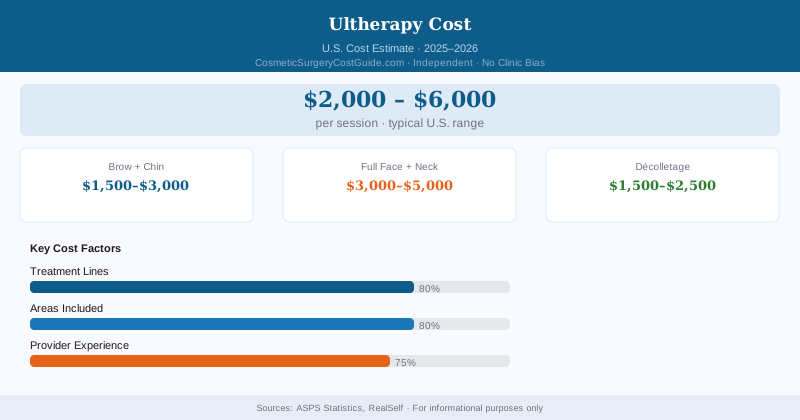
Ultherapy Cost in 2025
| Treatment Area | Cost Range | Sessions |
|---|---|---|
| Brow lift only | $900–$1,800 | 1 |
| Lower face (jowls, jawline) | $1,200–$2,500 | 1 |
| Neck | $1,500–$2,500 | 1 |
| Full face + neck | $3,000–$5,000 | 1 |
| Décolletage | $1,000–$2,000 | 1 |
| Maintenance (after 12–18 months) | $1,500–$3,500 | 1 |
How Ultherapy Works
Ultherapy uses ultrasound imaging to visualize the tissue layers before treatment — this is important and separates it from devices that don’t image first. Then it delivers focused energy precisely to the SMAS layer at 4.5mm depth (the same layer surgeons address in a facelift), as well as the dermal layer at 3mm and 1.5mm depths.
The energy creates tiny coagulation points — controlled thermal injuries — that trigger the body’s healing response: new collagen production and contraction of existing collagen. Over 3–6 months, this produces a measurable lifting effect.
Treatment takes 60–90 minutes. No anesthesia, though most providers apply topical numbing cream beforehand. Patients describe it as uncomfortable — deep heating sensations — rather than painful. That’s an honest description.
Ultherapy marketing sometimes uses language like “non-surgical facelift.” This is technically permissible because it’s FDA-cleared for lifting, but it significantly overstates what the treatment produces compared to surgical lifting.
What you can realistically expect from a full-face Ultherapy treatment:
- Brow: 1–2mm lift (measurable, visible in photos)
- Jowl: 10–20% improvement in laxity
- Neck: Modest tightening
- Overall: A refreshed, slightly lifted appearance that looks natural
What you cannot expect:
- Results comparable to a facelift
- Significant correction of moderate-to-severe laxity
- Immediate visible improvement (changes develop over months)
Ultherapy is best suited for patients in their late 30s to early 50s with mild-to-moderate laxity, not for patients who need surgery.
Who Benefits Most from Ultherapy
Best candidates:
- Ages 35–55 with early to moderate facial laxity
- Patients who want prevention and maintenance, not dramatic correction
- Those who’ve had surgical lifting and want to extend results
- Patients who can’t or won’t consider surgery
- Those maintaining results between surgical procedures
Poor candidates:
- Patients with significant skin laxity — surgery is the appropriate tool
- Very thin patients with little soft tissue for treatment
- Anyone expecting surgical-level results
- Those with active skin conditions in the treatment area
Ultherapy vs. Thermage vs. Surgical Lift
| Treatment | Cost | Downtime | Results |
|---|---|---|---|
| Ultherapy (full face) | $3,000–$5,000 | None | Subtle lifting, gradual |
| Thermage FLX (full face) | $2,500–$4,500 | None | Similar to Ultherapy |
| Emface | $1,500–$3,000 | None | Muscle-based lifting |
| Thread lift | $2,500–$5,000 | 3–5 days | Moderate, 1–2 year duration |
| Mini facelift | $6,000–$9,000 | 1–2 weeks | Significant, 5–7 year duration |
| Full facelift | $12,000–$20,000 | 2–4 weeks | Very significant, 8–12 years |
Ultherapy results are real but modest. The cost per unit of lift is significantly higher than surgical options for patients with meaningful laxity. For patients just beginning to notice early changes, it’s a legitimate first intervention. For patients who already have meaningful sagging, this math doesn’t favor non-surgical options.
Duration of Results
Results typically last 12–18 months before retreatment is needed. Some patients describe improvement lasting up to 2 years. Annual or every-other-year maintenance sustains the improvement.
At $4,000 per full-face treatment every 18 months, the annual maintenance cost is roughly $2,667. Over 10 years: $26,670. A facelift lasting 8–12 years might cost $15,000–$20,000 all-in. The long-term math isn’t in Ultherapy’s favor for patients with significant laxity — though it remains a reasonable choice for those avoiding surgery.
Ultherapy has been associated with nerve injury in rare cases — typically transient facial nerve paresthesia (numbness or tingling) that resolves within weeks to months. Permanent nerve injury is extremely rare but has been documented. This risk is minimized by proper imaging confirmation of treatment depth before energy delivery. Providers skipping the imaging step to speed up treatments increase this risk. Verify your provider uses imaging (not just feel) to confirm transducer placement.
Package and Promotional Pricing
Ultherapy is frequently discounted at promotional events. Many practices offer 20–40% discounts during specific months — especially around the holidays or slow summer months. Signing up for a practice’s email list or loyalty program often surfaces promotional pricing before it’s publicly advertised.
Bottom Line
Full-face Ultherapy with neck: $3,500–$5,000 at most reputable practices. For patients with mild-to-moderate laxity in their 40s, it’s a legitimate non-surgical option for subtle improvement. For patients with meaningful sagging who want significant change, a surgical consultation is the more honest recommendation. Don’t let “non-surgical facelift” marketing substitute for an honest conversation about whether Ultherapy or surgery is the right tool for your anatomy and your goals.