If you’re researching tear trough filler, you’re probably tired of looking tired. The hollow groove under your eyes — the tear trough — creates a shadow that makes you look exhausted no matter how much sleep you got. Filler can address that hollowing. But this is also the one area on the face where bargain-hunting with an inexperienced injector has a high probability of making things noticeably worse.
Here’s an honest look at what it costs, what it can and can’t fix, and how to find someone who actually knows what they’re doing.
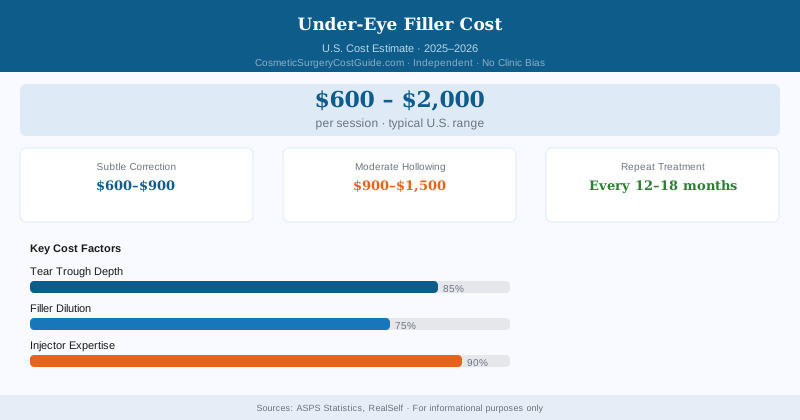
Under-Eye Filler Cost
| Scenario | Product | Syringes | Cost |
|---|---|---|---|
| Mild tear trough hollowing | Restylane or Belotero | 0.5–1mL | $450–$1,000 |
| Moderate tear trough hollowing | Restylane Eyelight, Juvederm Volbella | 0.5–1mL | $550–$1,100 |
| Both sides (typical treatment) | Various | 1 syringe total | $650–$1,100 |
| Tear trough + cheek combined | Various | 2–3 syringes | $1,400–$2,500 |
| Dissolution (hyaluronidase) | — | — | $200–$500 |
What Tear Trough Filler Actually Treats
The tear trough creates a shadowy, dark appearance in the under-eye area. The shadow comes from:
- Volume loss: The fat pad under the eye descends with age, creating a hollow
- Skeletal changes: The orbital bone remodels, deepening the hollowing
- Thin skin: Under-eye skin is extremely thin and translucent, revealing the hollow below
Filler adds volume to fill that hollow, reducing the shadow and making the under-eye look more rested. What filler does NOT address:
- Puffiness or fat bags under the eyes — filler makes this worse, not better
- Dark pigmentation in the skin itself — that requires skin treatments, not filler
- Excess skin — that requires blepharoplasty
This is critical. If you have puffiness, filler won’t help you and will likely make you look worse. If you have hollowing, filler can be genuinely excellent.
Tear trough filler is among the highest-risk areas for injection complications. Proximity to the eye means vascular complications can affect vision in rare but serious cases. Restylane EyelightTM is the only filler with FDA approval specifically for the tear trough — many others are used “off-label,” which is common and acceptable but means you’re relying entirely on the injector’s expertise rather than FDA-studied indications. This is not an area to seek bargain injection services. Choose only experienced injectors — dermatologists or plastic surgeons with specifically documented tear trough filler experience.
The Tyndall Effect: A Common Complication
When hyaluronic acid filler gets placed too superficially in the thin under-eye skin, you can end up with a bluish discoloration called the Tyndall effect. The light scatters through the filler and creates a blue-gray shadow — one that often looks worse than the original hollow.
Fixing it requires hyaluronidase (filler dissolution). This is exactly why deep placement and the use of a cannula rather than a sharp needle is preferred by experienced tear trough injectors. Products with lower water affinity — Juvederm Volbella, Belotero, Restylane Eyelight — are typically preferred over higher-absorbing products that can cause puffiness.
How Long Does It Last?
Tear trough filler typically lasts 12–18 months, though there’s real variation. Some patients go 2 years; others need retreatment at 9 months. The under-eye area is highly mobile, which can accelerate breakdown. Because the amounts used are small — often just 0.5mL total for both eyes — the annual maintenance cost is lower than most other filler treatments.
Good candidates:
- Hollow, sunken under-eye area (not puffy/fatty)
- Volume loss as the primary concern
- Realistic expectations about subtle improvement
- No significant excess skin
Poor candidates:
- Significant under-eye fat bags or puffiness (filler makes this look worse)
- Very thick or irregular skin under eyes
- History of filler reactions
- Patients who want dramatic change — tear trough filler is subtle
If you have puffiness AND hollowing, the surgeon may recommend lower blepharoplasty to reposition or remove the fat before or instead of filler. Using filler to fill around bulging fat creates an overly full appearance.
Alternatives to Tear Trough Filler
Lower blepharoplasty: Surgical removal or repositioning of fat bags, removal of excess skin. More expensive ($3,500–$7,500 all-in) and requires recovery, but produces a long-lasting result that filler simply can’t match for patients with significant structural issues.
Fat transfer: Your own fat fills the tear trough. More natural, longer-lasting than HA filler, but it’s a surgical procedure with more recovery. Cost: $2,500–$4,500.
Platelet-rich plasma (PRP): Some practices inject PRP under the eye to stimulate collagen and improve skin quality. Results are modest and less predictable than filler. Cost: $400–$800 per session.
Topical retinoids: Won’t fill a hollow, but can improve skin quality and reduce the translucency that makes hollowing appear darker — a useful complement to filler or standalone for very mild cases.
Cost Over Time
At $800 per treatment session (1 syringe) every 14 months on average, the annual cost works out to roughly $685/year. Compared to other filler sites, tear troughs are relatively economical — small volumes produce meaningful results.
Bottom Line
Tear trough filler: budget $700–$1,100 for a full treatment of both eyes with a skilled, experienced injector. Choose your provider carefully — this is the one filler site where inexperienced injectors cause the most visible problems. If you’re dealing with puffiness rather than hollowing, schedule a consultation with a plastic surgeon or oculoplastic surgeon before investing in filler that won’t address the real problem.